Your Guide to Local Sod Laying Services in Your Area
Sod Installation 101: How to Achieve a Flawless Green Lawn
For achieving that immaculate green lawn, sod installation is your best bet. Start by identifying which type of grass thrives in your local climate. Thorough soil preparation is equally important; it forms the foundation for your new lawn. However there's much more than just installing strips of grass. Let's explore the essential steps that will position you for success.
Picking the Right Type of Sod for Your Climate
When selecting sod, what's the best way to identify which variety fits your climate? Begin by assessing your area's weather patterns. If you live in a warm area, consider warm-season grasses like Bermuda or Zoysia, which thrive in heat. For cooler climates, cool-season grasses such as Kentucky Bluegrass or fescue are ideal, as they flourish in cooler temperatures. Factor in both soil type and the amount of sunlight your yard receives. Certain varieties need direct sunlight, whereas others can handle shaded areas. Choosing a sod that fits your specific environment is key to achieving a lush, robust lawn. Remember to consider upkeep requirements; certain varieties demand more watering and cutting than others. Make an informed choice, and you'll set your lawn up for success.
Readying Your Soil for Proper Sod Installation
Prior to installing your new sod, it's essential to prepare your soil adequately to ensure a thriving lawn. Begin by eliminating the area of any debris, rocks, and old grass. Then, test your soil's pH and nutrient levels; this will help you determine if you need to amend it. If required, add organic matter like compost to enhance soil structure and fertility. Level the soil to create a smooth, flat surface, guaranteeing proper drainage. Aerating the soil can also boost root penetration. Lastly, water the area gently to dampen the soil without making it waterlogged. By completing these tasks, you'll create a solid foundation for your new sod to prosper and develop a vibrant, green lawn.
Guidelines for Laying Your Sod Correctly
Now that your soil is ready, it's time to put down your sod appropriately. You'll want to place the pieces in staggered rows for a seamless look, and don't forget to keep them watered consistently. Following these steps will help you achieve a lush and vibrant lawn.
Prepare Your Soil The Right Way
To obtain a lush, healthy lawn, getting the soil properly is crucial before laying your sod. Begin by cleaning the area of any debris, rocks, and weeds. Afterward, use a garden tiller to break up the soil to a depth of about 3 to 4 inches, ensuring it's loose and aerated. Next, level the soil with a rake, filling in any low spots and removing high spots. It's also essential to test the soil's pH and nutrient levels; you may need to add amendments like compost or fertilizer to create ideal growing conditions. Lastly, water the soil lightly to help it settle, making it ready for your new sod to thrive.
Install Sod In Staggered Rows
When you're ready to install your sod, it's important to do so in staggered rows for ideal coverage and a seamless appearance. Commence by positioning your first piece along a straight edge, ensuring it fits snugly against any borders. When you place the next piece, offset it by half the length of the previous piece. This staggered pattern helps eliminate gaps and reduces the chances of weeds appearing later. Continue this method across the entire area, adjusting pieces as needed to fit around edges or obstacles. Take your time to align each piece carefully, keeping the seams tight. By installing sod in staggered rows, you'll create a verdant, uniform lawn that's attractive and healthy.
Regular Watering And Maintenance
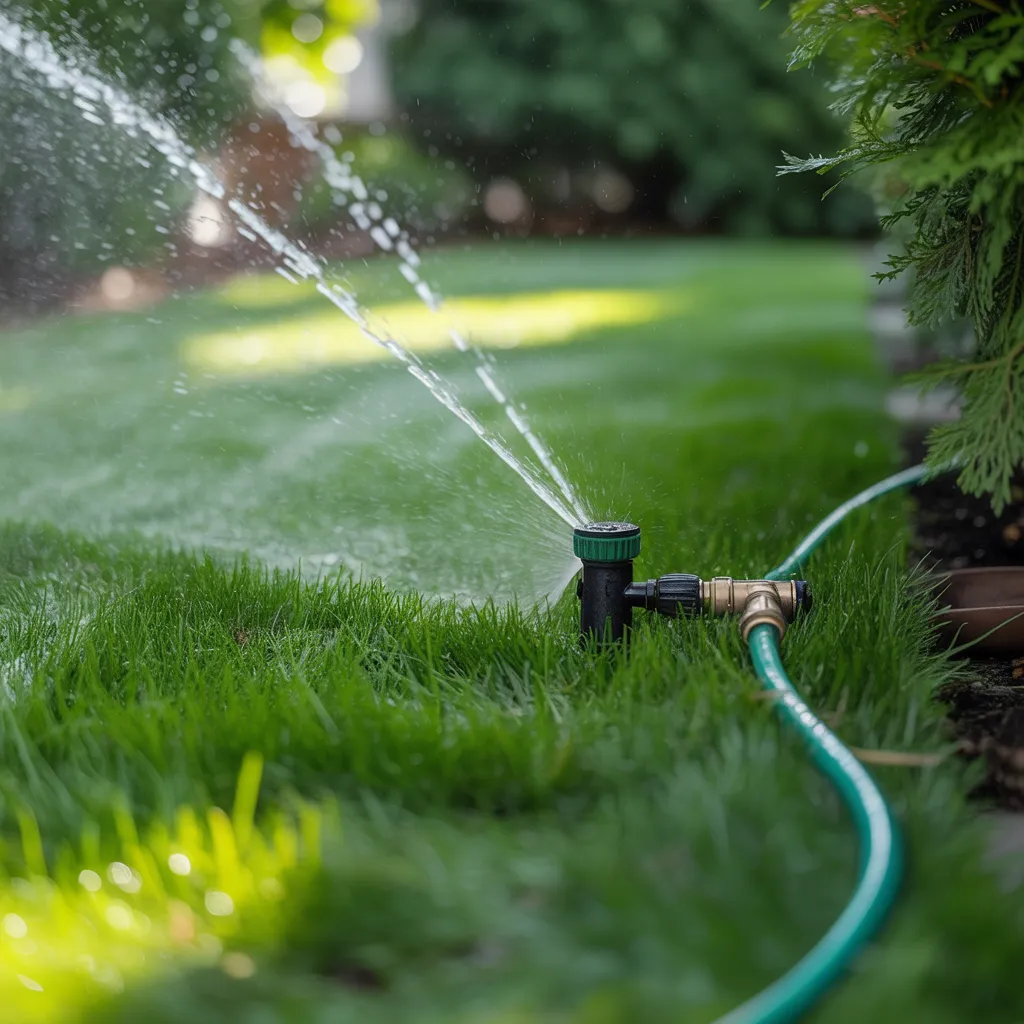
Once you've laid your sod, consistent watering and maintenance are crucial to establish a lush lawn. Start by giving your new sod a deep soak immediately after installation. During the initial two weeks, water it daily, seeing to it that the soil stays moist but not saturated. After that, you can lower watering to every other day, depending on the weather.
Along with watering, watch your sod for any evidence of stress or pests. Start mowing when the grass reaches about 3 inches high—don't cut more than one-third of the blade at a time. Lastly, apply a starter fertilizer after two weeks to stimulate root growth. With proper care, you'll soon enjoy a green, lush lawn.
New Sod Watering: Essential Techniques
Watering new sod is essential for establishing a healthy lawn, and proper technique can make all the difference. Water the sod immediately after installation to make certain the roots don't dry out. Aim for about 1 to 1.5 inches of water per week, adapting based on weather conditions. In the first two weeks, water daily to keep the soil consistently moist; this helps the roots establish. You can decrease the frequency to every other day after that. Water early in the morning to limit evaporation and fungal growth. Focus on the edges of your sod, as they often dry out faster. Always inspect the soil moisture by digging slightly to ensure proper hydration.
Apply Fertilizer to Your Lawn After Installing Sod
To make sure your new sod flourishes, fertilizing it shortly after installation is crucial. A starter fertilizer high in phosphorus will promote root development and help your sod settle in quickly. Spread the fertilizer within a week of laying the sod. Adhere to the package instructions for the right amount, ensuring you don't use excessive fertilizer, which can hurt your new grass.
Apply the fertilizer consistently, either by hand or with a broadcast spreader, to avoid patches. Water your sod following fertilizing to enable the nutrients penetrate the soil. This feeding will supply your sod the nutrients it requires during the essential establishment phase. Remember to monitor your lawn's progress and modify your fertilization schedule as necessary to keep it vibrant and beautiful.
Don't Make These Frequent Mistakes When Installing Sod
When installing new sod, it's possible to neglect important steps that can lead to problems down the line. Improper soil preparation and ignoring your irrigation schedule can undo all your labor. Let's explore these common mistakes so you can establish a lush lawn.
Improper Soil Preparation
Thorough soil preparation is crucial for a prosperous sod installation, yet many homeowners neglect this critical step. If you want your new sod to prosper, it's important to start with the right foundation. First, eliminate any debris, rocks, and old grass to ensure a clean surface. Next, test the soil pH and nutrient levels; you could need to amend the soil with compost or fertilizer. Loosen the top 2-4 inches of soil to facilitate root penetration, and avoid pressing it too much. Finally, verify the ground is level to prevent water pooling. Taking the time to prepare your soil thoroughly can make all the difference in achieving that lush, green lawn you envision.
Neglecting Watering Schedule
Many homeowners underestimate the importance of a consistent watering schedule after installing sod, which can result in disappointing results. Immediately after laying the sod, you need to thoroughly soak it to help the roots establish. For the first two weeks, water daily, ensuring explanation the soil keeps moist but not soggy. As the sod begins to root, you can gradually cut back the frequency to every other day, then to twice a week. Remember, during hot or windy days, you might need to modify your watering to prevent drying out. Neglecting this schedule can cause your sod to brown, die, or wilt. So, check moisture levels, and you'll be on your way to a lush, green lawn.
Caring for Your New Sod for Long-Term Success
To guarantee your new sod prospers for years to come, you'll need to prioritize consistent care right from the start. Begin by watering your sod thoroughly and consistently, especially during the first few weeks. Once established, cut back watering to about once a week, but adjust based on weather conditions. Mow your sod routinely, but never cut more than one-third of the grass height at once. Nourish your lawn at least twice a year with a balanced fertilizer to keep it vibrant. Keep an eye out for weeds and pests, tackling any issues promptly. Finally, aerate your lawn annually to stimulate root growth and improve soil health. With dedication, your sod will flourish beautifully for years ahead.
FAQ
How Much Time Does It Take for Sod to Develop Roots?
Your sod generally takes approximately two to three weeks to root properly, depending on soil quality and weather conditions. Throughout this period, ensure adequate watering to support strong root growth and healthy establishment.
Is Winter Sod Installation Possible?
While winter sod installation is feasible, it comes with difficulties. Root establishment is slowed by cooler conditions, and the grass can be damaged by frost. Should you proceed, ensure adequate maintenance and track temperature conditions to maximize success.
What Equipment Do I Need for Installing Sod?
You're going to need a few essential tools for sod installation: a shovel, rake, lawn roller, sharp knife, garden hose, and a measuring tape. These items will help you prepare the ground and guarantee a smooth installation.
Should You Walk on New Sod?
The best practice is to avoid walking on newly laid sod for at least 14 days. This affords the grass the opportunity to form a strong root system. If you need to, move carefully and minimize traffic to stop damage.
How Do I Know if My Sod Is Healthy?
You can identify healthy sod by examining its texture, color, and moisture levels. Look for bright green blades, a tender feel, and moist soil underneath. If it recovers when stepped on, it's flourishing!